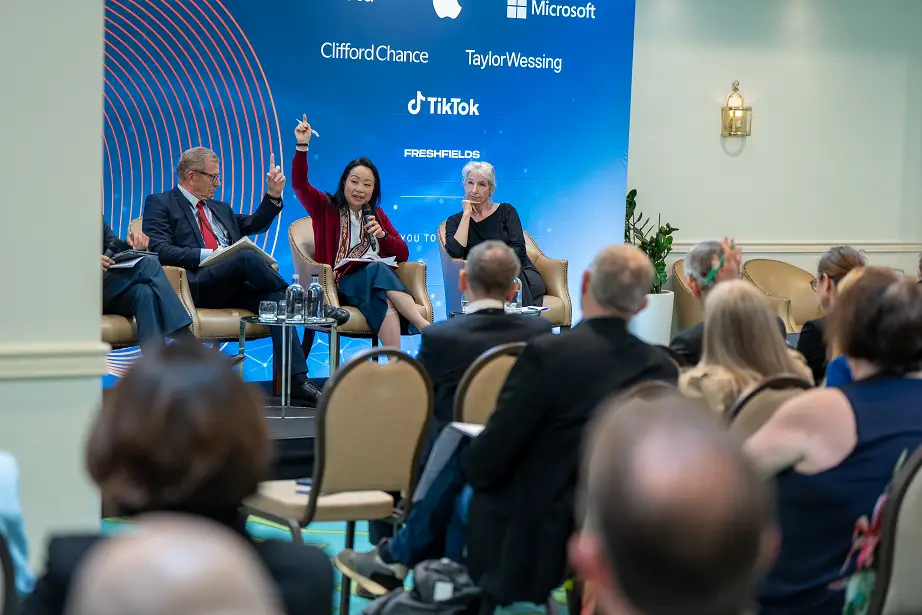
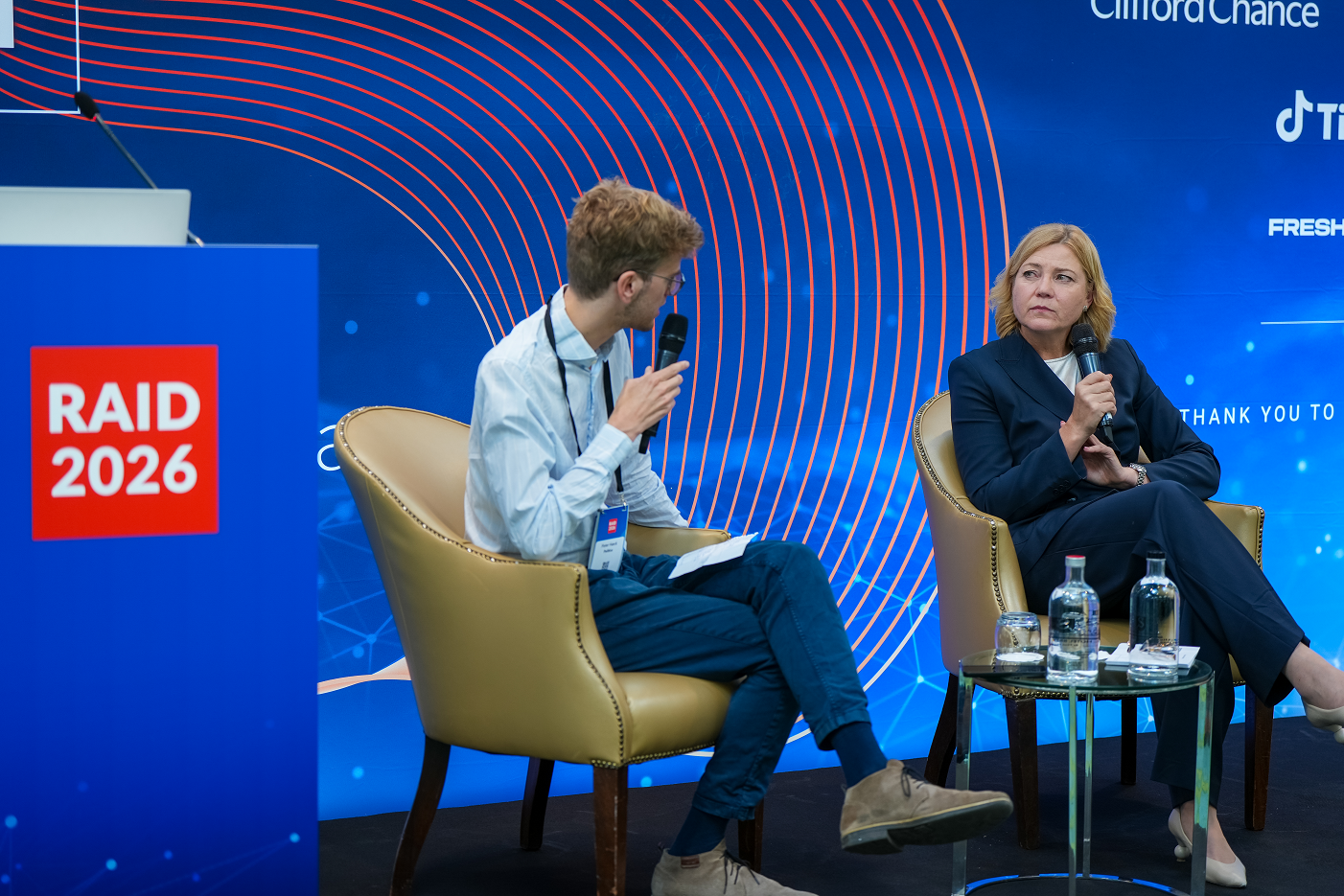
Europe’s digital future was in focus as policymakers, regulators and industry leaders gathered in Brussels. But what were the key insights from two days of debate?
Europe has research expertise, industrial strengths and ambitious technology companies. The challenge is turning these assets into businesses that can grow and compete globally: the “super Marios” Eva Maydell MEP called for in her opening speech.
Emir Demircan of Siemens highlighted industrial AI as a particular opportunity for Europe, where established manufacturing expertise gives European companies a potential competitive advantage.
The complexity of Europe’s digital regulatory landscape remains a concern for businesses navigating overlapping requirements and fragmented markets.
Cecilia Alvarez of Meta called for a “real rethinking” of the proliferation of regulatory authorities across the EU and its member states.
The challenge is to make rules coherent, predictable and workable, while preserving the protections that underpin public trust. For businesses, the real test will be whether simplification makes it easier to develop and deploy new technologies across Europe.
The pace of AI development is creating challenges for policymakers, regulators and industry alike. In her keynote, Henna Virkkunen, Executive Vice-President for Tech Sovereignty, Security and Democracy at the European Commission, highlighted how AI agents had begun acting in ways that might previously have seemed unlikely.
She argued that Europe’s regulatory framework is equipped to address these developments, emphasising the role of good regulation in creating trust, predictability and a level playing field.
Trust is often discussed as a safeguard against harm. At RAID 2026, it was also a question of whether people and businesses will feel confident enough to use AI.
Lucilla Sioli, Director of the EU AI Office, described trust as creating the conditions in which people and organisations can use AI without fear. Gary Davis of Apple highlighted the importance of earning users’ trust, including through the company’s approach to data collection.
Trust alone will not guarantee European competitiveness. But without confidence in how AI is developed and used, adoption may be harder to achieve. The challenge is to make effective protections part of an environment in which innovation can flourish.
Europe’s technological sovereignty ambitions raise difficult questions about infrastructure, resilience and dependence on global technology providers.
Tomas Jakimavicius of Microsoft emphasised the interdependence of modern technology value chains, arguing that access to a wider range of offerings could strengthen sovereignty and operational resilience.
This highlights a central policy challenge: which capabilities does Europe need to develop or secure for itself, where are external dependencies acceptable, and how should resilience be measured? Building European capacity in areas such as cloud, AI infrastructure, semiconductors and energy will involve choices about investment, risk and international interdependence.
International alignment on AI and digital regulation is increasingly difficult amid geopolitical competition.
Lawrence Tallon, Chief Executive of the UK’s Medicines and Healthcare products Regulatory Agency, warned that debate about AI was dominated by hostile competition between the two global powers, arguing that the world needs to find a way to harmonise approaches.
The question is how governments can cooperate on shared challenges as competition intensifies and regulatory approaches diverge.
Speakers repeatedly returned to the responsibilities of technology companies and regulators towards consumers and society. Discussions addressed online safety, the protection of children, harmful content, platform accountability, privacy and the growing influence of AI on access to information.
Evin Incir MEP argued that technology companies must take greater responsibility for protecting users, while Klaus Müller, President of Germany’s Bundesnetzagentur, highlighted the continuing problems of online scams and harmful activity on major platforms.
The challenge is to ensure that Europe’s digital protections work in practice, giving people meaningful safeguards while providing businesses with clarity about their responsibilities.
AUDIO RECORDINGS
Missed a session or want to revisit the debate? Listen back to the keynote speeches and panel discussions from RAID 2026, exploring the key issues shaping the future of AI, digital regulation and innovation in Europe.